🏆 Common Paraphrasing Mistakes and How to Fix Them (With Real Examples)
Apr 06, 2026
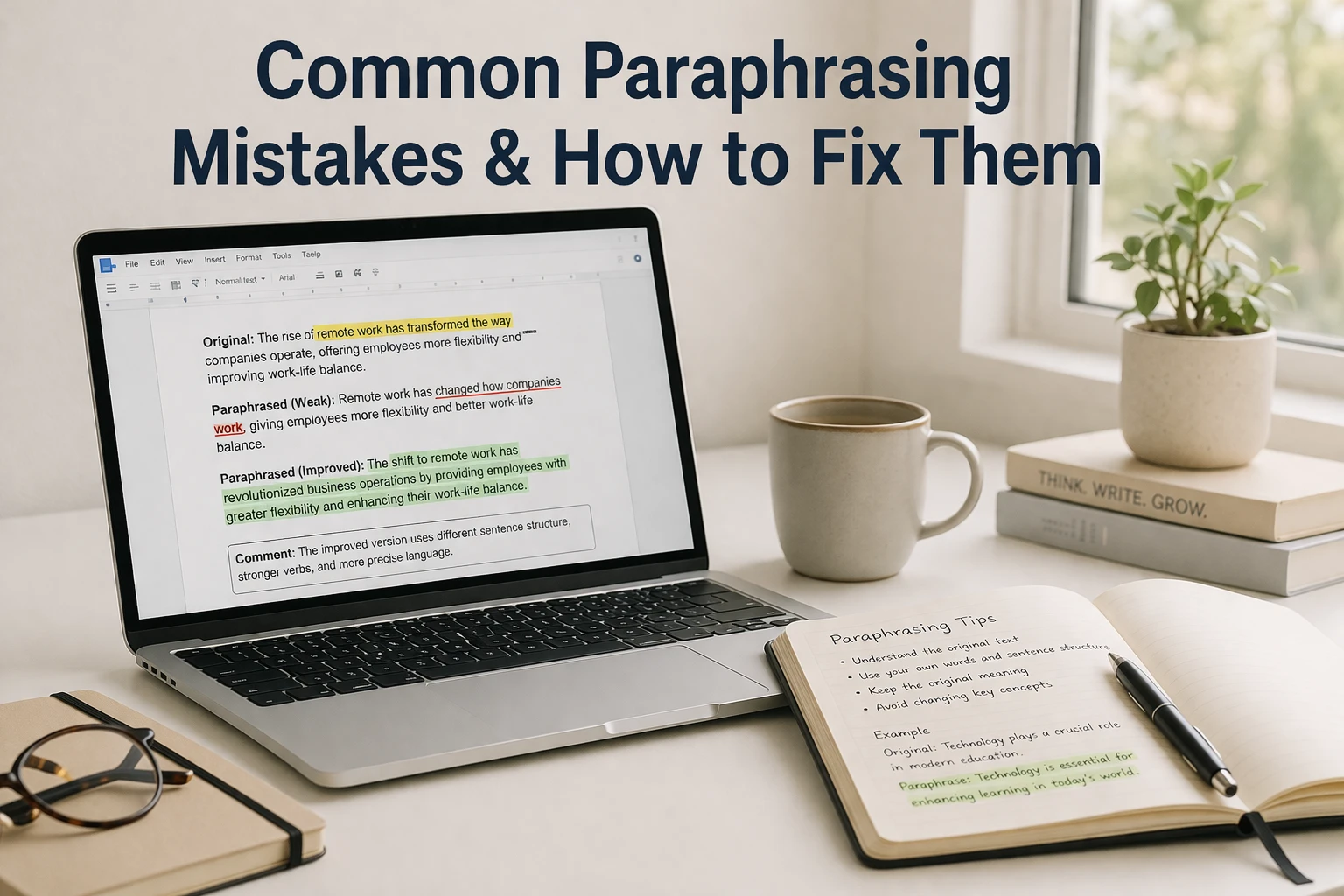
Paraphrasing mistakes and how to fix them are important to understand for anyone involved in academic writing, blogging, or SEO content creation. These mistakes often occur when writers simply replace words instead of fully rewriting sentences, keep the same structure, or fail to understand the original text—leading to plagiarism and weak content quality.
To avoid these issues and create accurate, original content, you can use a reliable paraphrasing tool like e4Tools Paraphrasing Tool, which helps rewrite text while preserving meaning.
You can also explore how AI helps in rewriting content in our detailed guide on AI paraphrasing guide, where we explain how tools can assist in creating better and more original content.
Paraphrasing is one of the most essential skills in academic and content writing, yet it is often misunderstood. Many writers believe that replacing a few words with synonyms is enough to create original content. However, this approach can still result in plagiarism, even when the intention is honest.
True paraphrasing goes beyond changing words—it involves transforming ideas while preserving the original meaning. It requires a deep understanding of the source text, careful analysis of its intent, and the ability to rewrite it in a completely new structure that improves clarity, readability, and uniqueness.
If you’ve searched for “paraphrasing mistakes and how to fix them” or struggled with content that still feels too close to the source, you’re not alone. Most paraphrasing errors happen because writers focus on individual words instead of overall meaning, which limits originality and weakens writing quality.
In this guide, you will learn the most common paraphrasing mistakes and how to fix them using practical examples. You will also discover proven techniques to avoid plagiarism and improve your overall writing quality.
By the end, you will have a clear understanding of how to paraphrase correctly while maintaining accuracy, readability, and originality.
Understanding Paraphrasing at a Deeper Level
The skill of paraphrasing is not only a writing skill, but also a mental process, and it includes comprehending, analyzing, and re-phrasing ideas differently. Good paraphrasing involves critical thinking as well as interpretation of meaning.
Professional writers and academic experts do not rely on simple word substitutions. Instead, they:
- Break down complex ideas into simpler concepts
- Reconstruct sentences using new structures
- Maintain the original meaning while improving clarity
This is why weak paraphrasing often leads to:
- Unintentional plagiarism
- Loss of meaning
- Poor readability
The problem with many beginners is that they attempt to rewrite superficially, rather than profoundly. Replacing words does not bring about a new idea when the sentence structure and thought flow are retained.
A strong paraphrase always includes:
- A completely restructured sentence
- Clear understanding of the original message
- Improved clarity and flow
- Natural and human-like expression
Mastering paraphrasing is essential for:
- Academic writing
- SEO content writing
- Blogging and copywriting
- Professional communication
👉 In simple terms:
Paraphrasing = Understanding + Rewriting + Improving
This process becomes much easier when supported by a smart AI paraphrasing tool that helps transform ideas into clear, well-structured content.
Academic writing experts, such as those at Purdue OWL, emphasize the importance of rewriting ideas in your own words to maintain originality and improve clarity.
Learn How to Paraphrase Correctly
Why Paraphrasing Still Leads to Plagiarism and How to Fix It
The majority of writers believe that they can easily evade plagiarism by simply paraphrasing, and this is not so. Poor paraphrasing is one of the major causes of plagiarism, especially in academic writing.
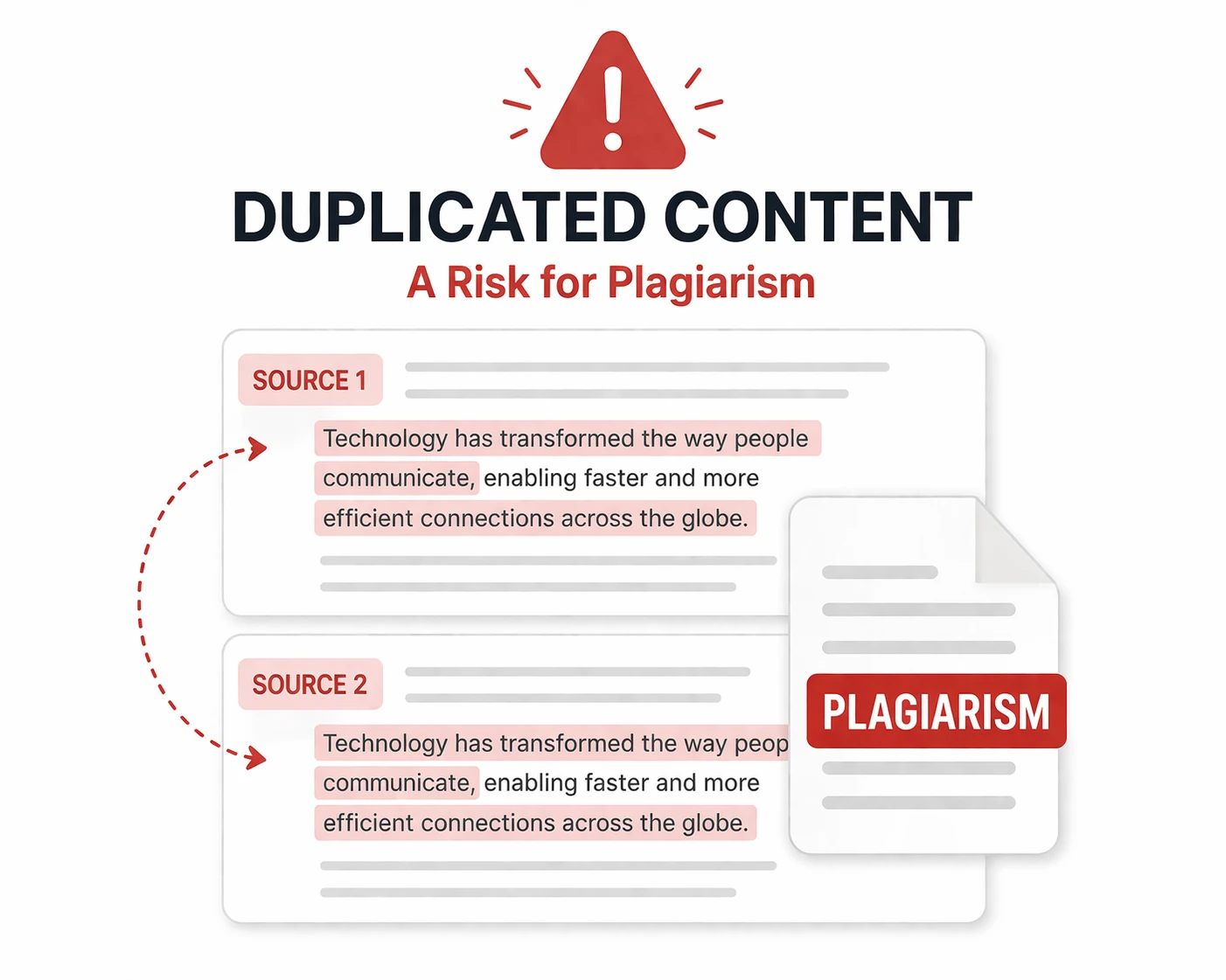
The main problem is that paraphrasing is not only about using different words-it is about changing thoughts but keeping the meaning.
Most mistakes happen because:
- The sentence structure remains nearly identical
- The writer does not fully understand the original context and intent
- Proper citation is not used when required
Although all the words may be changed, it is still possible to be flagged as plagiarism by using the same structure or flow. That is why the skills of paraphrasing are essential to learn.
To be capable of paraphrasing correctly, there should be deep knowledge and a capability to rephrase the information and express the ideas in an entirely different way.
Proper paraphrasing is essential to avoid plagiarism and maintain academic integrity, as explained by Plagiarism.org, one of the most trusted sources for understanding plagiarism and ethical writing practices.
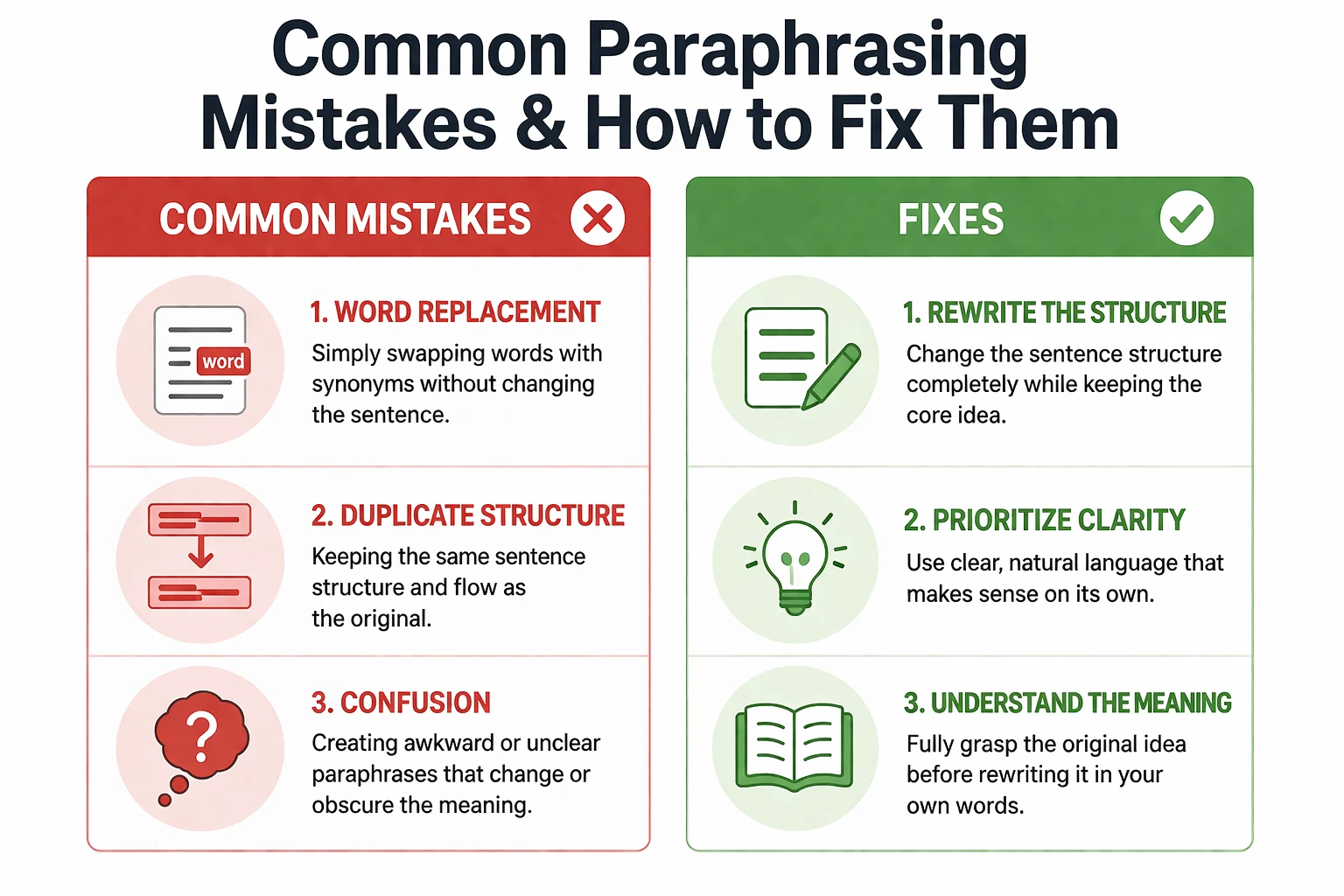
📊 Quick Overview: Common Paraphrasing Mistakes vs Fixes
🚫 8 Common Paraphrasing Mistakes (With Fixes)
The ability to learn these paraphrasing errors through examples can enhance your content rewriting and assist you to write more original and better content.
1. Only Replacing Words with Synonyms
It is among the most frequent errors that beginners commit.
But paraphrasing is not as easy as most authors believe it to do by swapping words with synonyms, such a process normally leaves superficial content with a low level of originality and readability.
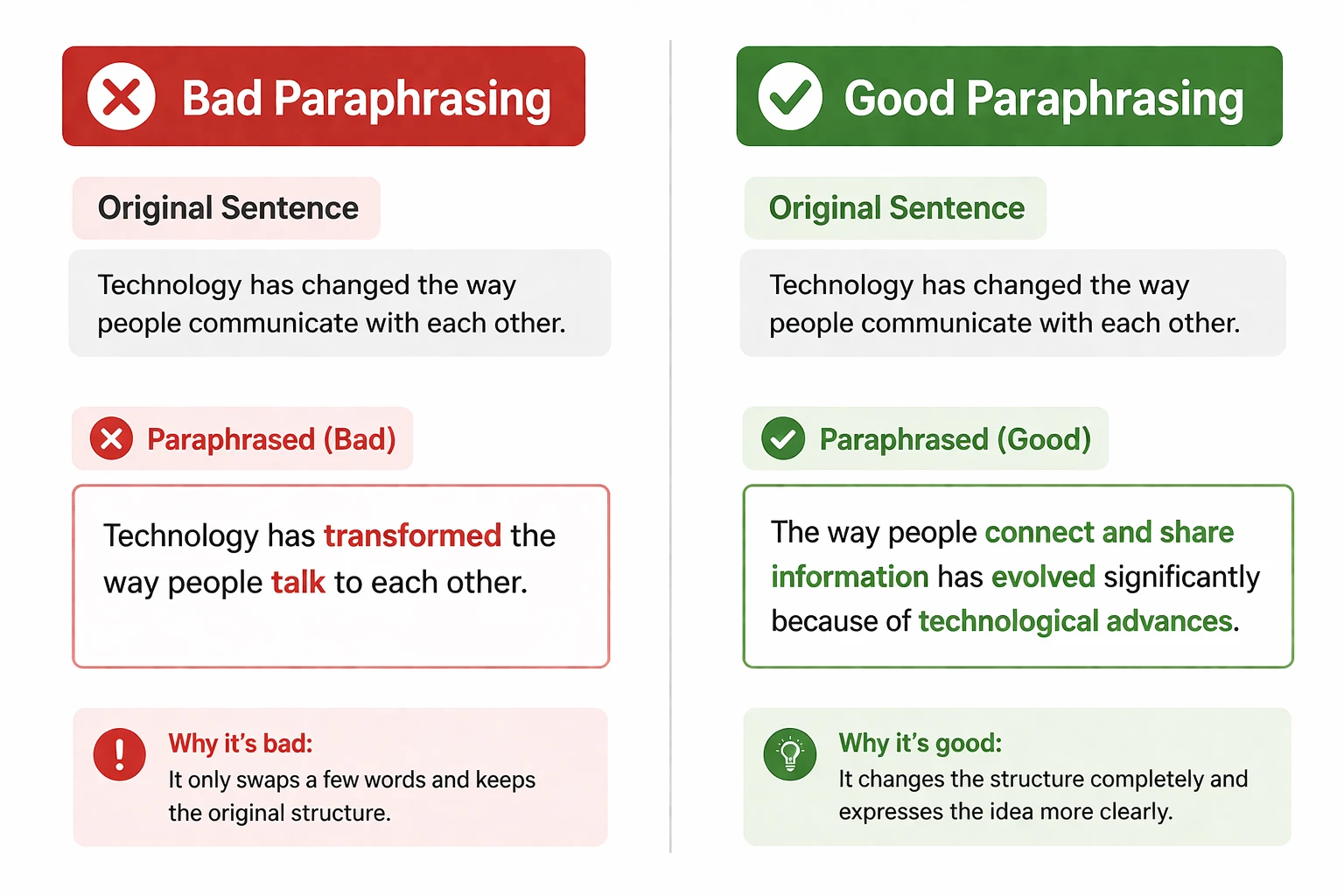
Bad:
“The internet has changed communication.”
→ “The web has altered communication.”
Problem:
- The sentence structure remains the same
- The meaning pattern is unchanged
- Low originality and weak impact
Fixed:
The internet has really changed the way individuals communicate.
Fix: You should not replace the words, but instead of doing that, you can re-write the entire sentence, making it clearer, better structured and easier to read.
2. Keeping the Same Sentence Structure
Even when the words are changed, keeping the same structure can make your content feel copied and less original.
Bad:
“Students need to manage their time effectively.”
→ “Students must manage their time efficiently.”
Problem:
- Same sentence pattern
- Very little transformation
Fixed:
Time management is one of the major factors that make students successful in academics.
Fix: Attempt to rewrite the entire sentence to enhance its readability and make it sound more natural.
3. Not Understanding the Original Text
This is among the greatest errors of paraphrasing, particularly in academic writing.
In many cases, authors have tried to rephrase information without comprehension of the information, and this leads to poor and even wrong paraphrasing.
Fix:
- Read the text carefully, ideally more than once
- Identify the core idea and supporting points
- Fully understand the context before rewriting
4. Changing the Meaning Accidentally
This is a critical mistake that can affect both accuracy and credibility.
Original:
“Regular exercise improves mental health.”
Wrong:
“Exercise mainly improves physical strength.”
Problem:
- The original meaning has been changed completely.
Fixed:
Physical exercise can have a positive effect on mental health.
Fix: Do not be fast but ensure that the meaning is not lost as the clarity and the expression are made clearer.
5. Writing Too Close to the Original
Problem:
- High risk of plagiarism
- Low level of originality
Fix:
- Combine or split sentences where needed
- Change the order of ideas
- Use different phrasing and sentence structures
6. Not Citing the Source
Why it matters:
- Gives proper credit to the original author
- Maintains ethical writing practices
Fix:
- Always include citations when using external ideas
- Follow the appropriate reference style when required
7. Overusing AI Without Editing
Common issues:
- Robotic or unnatural tone
- Loss of natural flow
- Sometimes inaccurate phrasing
Fix:
- Always review and edit AI-generated content
- If you rely on AI for writing, it is important to understand how to properly refine and improve the output, as explained in our free AI paraphrasing tool guide.
- Improve tone, clarity, and sentence flow manually
- Add a human touch to make the content sound natural and engaging
8. Ignoring Tone and Context
Problem:
- Breaks consistency in writing
- Reduces overall professionalism
Fix:
- Match your tone with your target audience
- Keep a consistent tone throughout the content
Examples of Paraphrasing Mistakes with Real-Life Examples
🔄 Example 1 (Academic Writing)
Original:
“Climate change is a significant global challenge affecting ecosystems.”
Bad:
“Climate change is an important worldwide issue affecting ecosystems.”
Problem:
- Same sentence structure
- very little transformation
- Low originality
Good:
The impact of climate change is a major global concern, as it continues to disrupt natural ecosystems.
🔄 Example 2 (Content Writing)
Original:
Content marketing helps businesses grow online.
Weak:
Content marketing allows businesses to grow on the internet.
Problem:
- Same structure
- Weak transformation
Improved:
Strategic content marketing can help the business to market online and access a larger audience.
🔄 Example 3 (Business Writing)
Original:
Email marketing is an effective way to reach customers.
Bad:
Email marketing is a good method to contact customers.
Problem:
- Same sentence structure
- Low uniqueness
Good:
Email marketing can help businesses to reach their audience well and create an effective customer relationship.
The SAFE Paraphrasing Framework (Your Unique System)
The SAFE model is a powerful and easy way to prevent the errors of paraphrasing and produce quality and original writing.
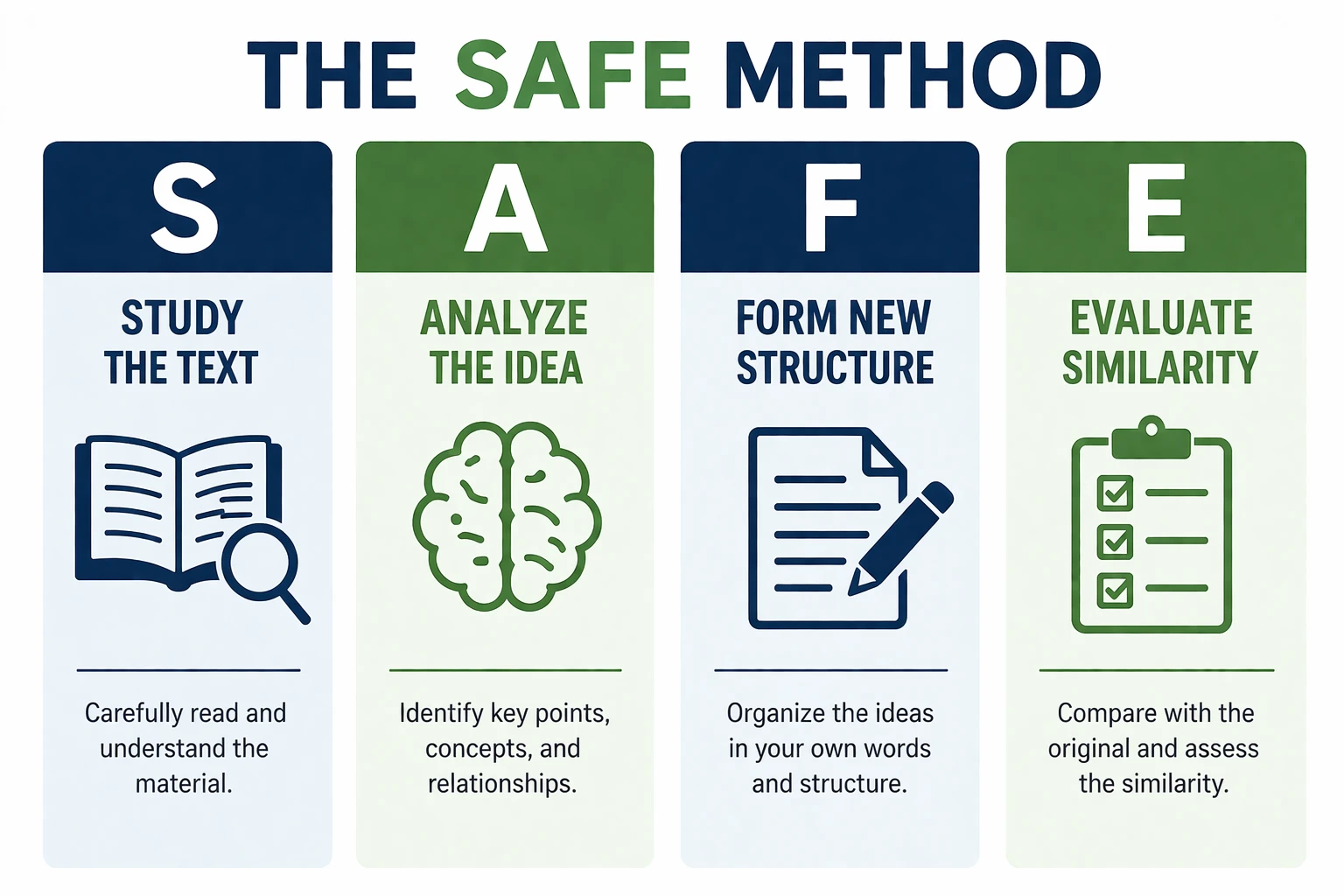
S — Study the Text
You must read the original content carefully to understand its full meaning, context, and purpose. Never hurry; the paraphrasing begins with a strong understanding.
A — Analyze the Core Idea
Identify the main idea and supporting points. Focus on what the text is trying to say rather than the exact wording.
F — Form a New Structure
Rewrite the content using a completely new sentence structure. Change sentence flow, combine or split ideas, and express the message differently.
E — Evaluate Similarity
Review your paraphrased content to ensure it is unique, clear, and not too close to the original. This step helps prevent plagiarism and improves quality.
You can apply this framework more efficiently by using a structured paraphrasing tool for rewriting that helps simplify rewriting and improve content quality.
This framework ensures:
- Better plagiarism prevention
- Improved content rewriting
- Stronger writing quality
🔗 When to Use a Paraphrasing Tool (Smart Way)
A paraphrasing tool can enhance efficiency, yet it must be utilized as a strategic tool and not as a total substitute for human writing.
A reliable online paraphrasing tool can help speed up this process while maintaining accuracy, clarity, and high-quality content.
Best practice:
- Use tools to create a rough draft
- Always review and edit manually
- Improve tone, clarity, and accuracy
- Ensure the final content sounds natural and human
Using tools wisely helps save time while maintaining content quality and originality.
⚠️ Quick Checklist: Are You Making These Mistakes?
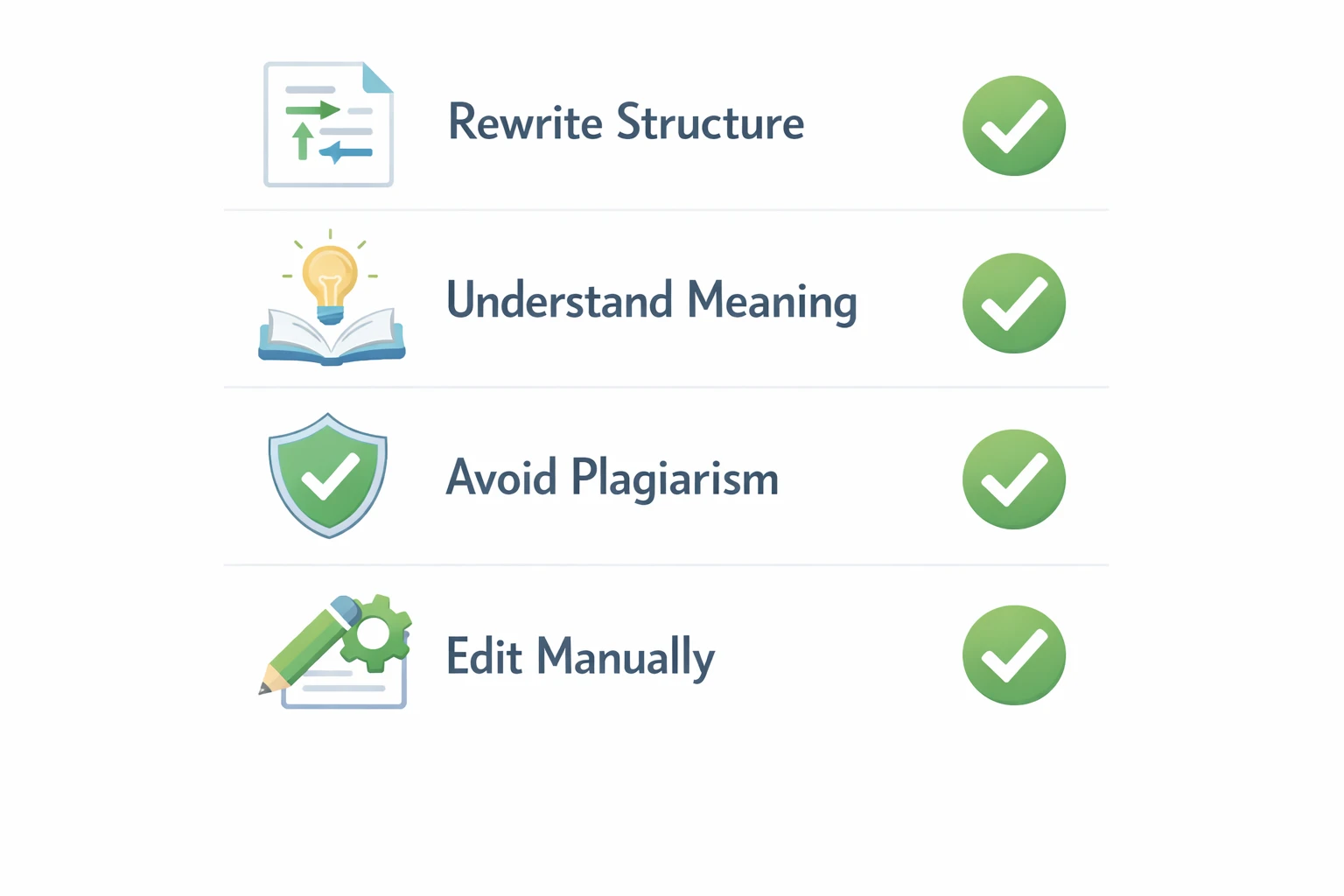
Check if you are doing any of the following:
✔ Only replacing words instead of rewriting structure
✔ Keeping the same sentence pattern
✔ Not fully understanding the meaning before writing
✔ Accidentally changing the original meaning
✔ Paraphrasing too close to the source
✔ Missing citations when required
✔ Overusing AI without manual editing
✔ Ignoring tone and target audience
If you answered yes to any of these, your paraphrasing may lead to low-quality content or plagiarism issues.
Final Tips to Avoid Paraphrasing Mistakes
- Always understand the text before rewriting
- Focus on meaning, not just replacing words
- Improve sentence structure and flow
- Edit for clarity, tone, and readability
- Ensure every paragraph is unique and original
- Explore more tools and resources on E4Tools designed to improve your content creation experience.
FAQs
The most common paraphrasing mistakes include replacing words with synonyms instead of rewriting sentences, keeping the same sentence structure, and not fully understanding the original text. These errors often result in plagiarism, poor readability, and weak content quality.
The only way of paraphrasing and not plagiarizing is to first have a full understanding of the information and then rephrase it in a completely different sentence and retain the meaning. Correct citations should also always be remembered when adopting external ideas to have original content and academic integrity.
A bad paraphrase is one that is too similar to the original text or changes the meaning of the content. It usually keeps the same structure or uses only minor word changes, which reduces uniqueness and can lead to plagiarism issues.
The errors in paraphrasing can be corrected through better sentence structure, pre-writing contextual knowledge, and writing in your own words. Editing and re-reading your work is also a good idea in case of clarity, accuracy and originality.
Conclusion
Paraphrasing mistakes and how to fix them are all vital to know in order to produce good, original and plagiarism-free content.
The purpose of paraphrasing is not to rewrite but to comprehend, to rearrange and to be clear in expressing ideas in your own words. You can greatly improve the quality of writing by preventing these common paraphrasing errors and using the SAFE model.
Improving paraphrasing skills is one of the most effective ways to enhance writing quality, as explained in this writing guide by Purdue OWL, which focuses on clarity, readability, and originality in writing.
Start applying these techniques today using a smart rewriting solution and try the paraphrasing tool to create clear, original, and plagiarism-free content.
Whether you are working in academic writing, content writing, or doing it with AI tools, at least paraphrasing techniques will make you write more clearly, effectively and more original work.